
As we transition from the anticipation of Hope, we arrive at the Second Sunday of Advent, ready to focus our hearts on Peace.
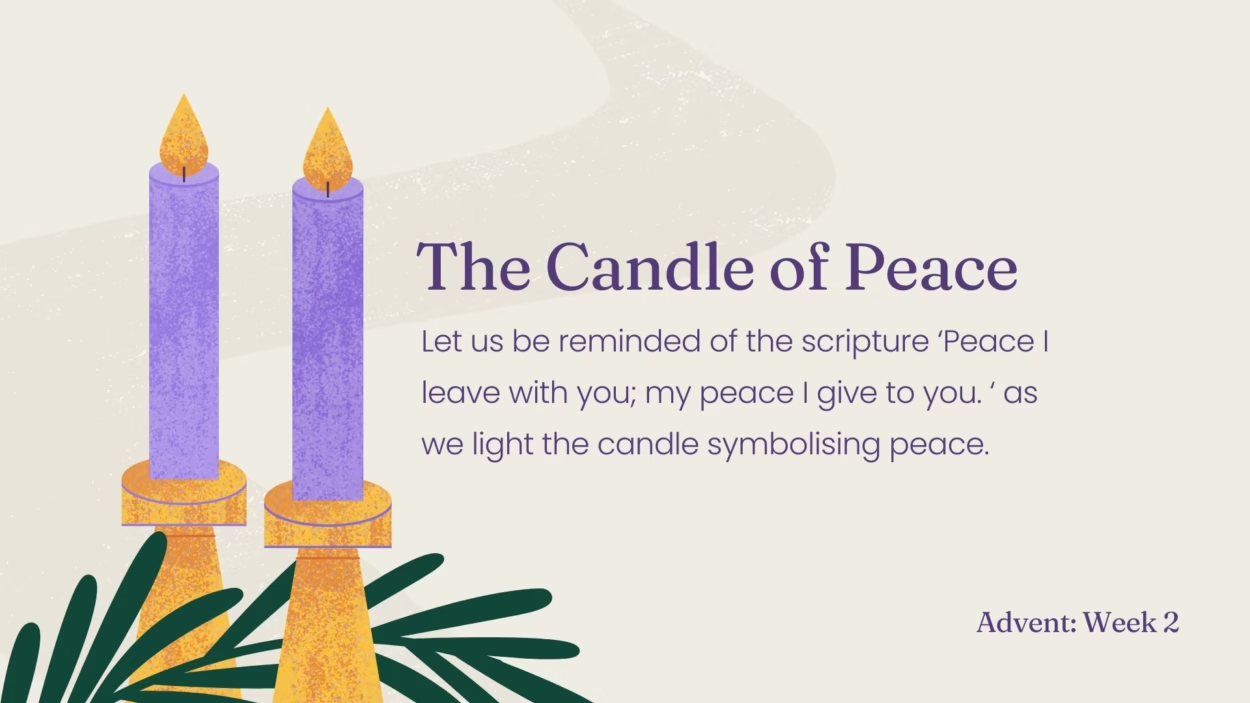
We light the second candle, that reminds us that true peace requires inner preparation and self-reflection. This candle is often called the Bethlehem Candle, directing our thoughts to the faithful, arduous journey Mary and Joseph made to the city where Jesus, the Prince of Peace, would be born.
Beyond the Absence of War
When we hear the word “peace,” we often think of the absence of conflict, a temporary truce or a moment without stress. But the biblical peace we seek this Advent is far more profound.
The Hebrew word for this peace is Shalom. It’s not just a cease-fire; it’s a powerful, comprehensive state of wholeness, harmony, and well-being. Shalom is everything working exactly as God intended, a genuine slice of heaven on earth. When we pray for Shalom, we are praying for the restoration of completeness, which includes justice, healing, and reconciliation.
The Unshakable Foundation: Peace with God
The most essential gift of Advent is the reconciliation of humanity with God through the coming of Christ. This is the foundation upon which all other peace is built.
The most essential gift of Advent is the reconciliation of humanity with God through the coming of Christ. This is the foundation upon which all other peace is built. The prophet Isaiah gave the Messiah a title that defines this promise, describing not just his name, but his eternal rule:
For a child has been born for us, a son given to us; authority rests upon his shoulders, and he is named Wonderful Counselor, Mighty God, Everlasting Father, Prince of Peace.
Great will be his authority, and there shall be endless peace for the throne of David and his kingdom. He will establish and uphold it with justice and with righteousness from this time onward and forevermore. The zeal of the Lord of hosts will do this.
(Isaiah 9: 6-7)
On the night of Christ’s birth, the angels announced this truth to the shepherds: “Glory to God in the highest heaven, and peace on earth to people he favours!” (Luke 2:14).
The Apostle Paul helps us understand who those “favored people” are. He assures us that because we are made right with God by faith, Therefore, since we have been justified by faith, we have peace with God through our Lord Jesus Christ (Romans 5:1). This peace isn’t a fragile hope; it’s a certainty rooted in the ultimate victory Christ has already won over sin and death.
The Call to Peacemaking: A Dual Action
Advent peace requires us to be both recipients and active participants. We must welcome God’s peace into our lives and carry that peace out into the world.
Receiving Inner Peace: The Quiet Heart
True peace often feels distant when our hearts are cluttered with worry, anxiety, and disordered priorities. This is why the Advent readings feature John the Baptist, whose powerful call to repentance is our guide. To “prepare the way of the Lord” means clearing that internal mess to make space for the divine.
Surrender Your Anxiety: Jesus offers a peace that the world cannot give, telling his followers: “Peace, I leave with you; my peace I give to you. I do not give to you as the world gives. Do not let your hearts be troubled, and do not let them be afraid.” (John 14:27). This is a quiet heart in the midst of the storm.
Trust Fully in God: The key is complete dependence and trust. God promises: “Those of steadfast mind you keep in peace, in peace because they trust in you.” (Isaiah 26:3). This faithful surrender is how we receive the deep, unexplainable sense of calm.
Practicing Outer Peace: Justice and Reconciliation
Shalom is a state of right relationship, and it compels us to be active peacemakers.
Work for Justice: Since biblical Shalom is linked to justice and equity, we are called to challenge broken systems, health the broken hearted, and actively work toward right relationships for all people. The pursuit of peace requires us to be agents of transformation, turning instruments of conflict into tools for common good and creative endeavours.
Seek Reconciliation: On a personal level, this means laying aside grievances, practicing forgiveness, and actively seeking reconciliation in our family and community before the celebration of Christmas. This is a tangible way to show that Christ’s peace is truly at work in us.
By embracing active waiting, repentance, and self-reflection, we align our lives with God’s ultimate, perfect plan.
The Peace Challenge
This week, commit to a moment of quiet surrender. Set aside 5 minutes of silence each day. During that time, intentionally slow down, name, and surrender one specific anxiety or worry to God. Trust that His plan for you is for your good and welfare. This simple, daily practice of releasing control and trusting fully is how you invite the fullness of Shalom into your heart.
What is one anxiety you will choose to surrender to the Prince of Peace today?
Sources & Further Reading:
- FIRM Israel. “Shalom – Biblical Peace.” https://firmisrael.org/learn/hope-in-hebrew-tikvah-hope-does-not-disappoint/
- Christianity Path. “Isaiah 9:6 – Prince of Peace.” https://christianitypath.com/isaiah-9-6/
- Crosswalk. “Peace That Transcends Understanding – Philippians 4:6–7.” https://www.crosswalk.com/faith/bible-study/how-to-experience-the-peace-of-god-which-transcends-all-understanding-promised-in-phil-47.html
- Lifeway. “Finding Peace During the Advent Season.” https://www.lifeway.com/en/articles/finding-peace-during-the-advent-season
- Christian Reformed Church; The Network. “Advent Week 2: Peace for a Troubled World.” https://network.crcna.org/topic/spiritual-formation/faith-practices/advent-week-2-peace-troubled-world
- The United Church of Canada. “Praying Through Advent: Peace.” https://united-church.ca/prayers/praying-through-advent-peace
- The United Church of Canada. “Your (Unofficial) Guide to Advent.” https://united-church.ca/sites/default/files/2023-12/au_basics-advent.pdfy.com/wiki/holidays/what-is-the-candle-of-peace-for-advent-week-2.html